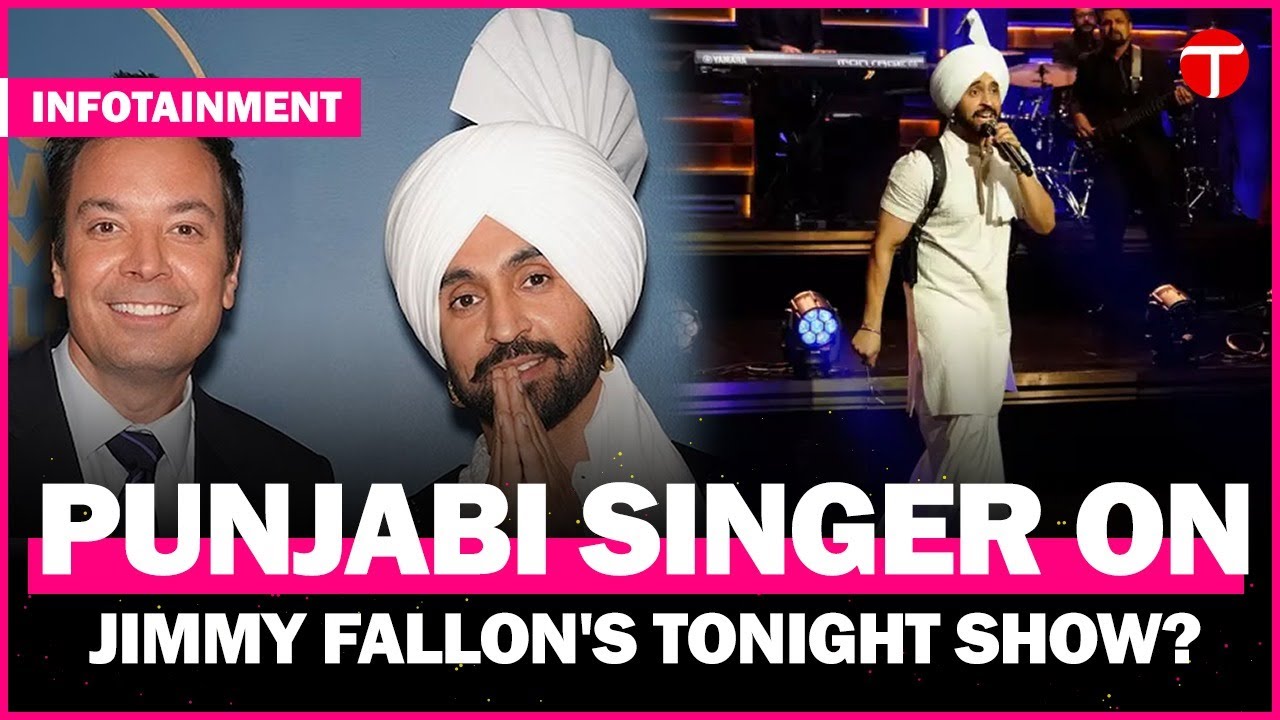
The lights of 30 Rockefeller Plaza don’t shine the same on everyone. For artists from non-Western music backgrounds, stepping onto The Tonight Show stage is more than a performance—it’s a cultural reckoning. When Diljit Dosanjh took that stage, microphone in hand and turban gleaming, he wasn’t just singing. He was rewriting narratives. Minutes after his set ended, he posted an emotional note that resonated far beyond his fans: “This one’s for every small town dreamer who believed in their accent, their language, their truth.” That moment—on stage and online—marked the arrival of Punjabi pop on the global mainstream map.
A Performance Steeped in Identity
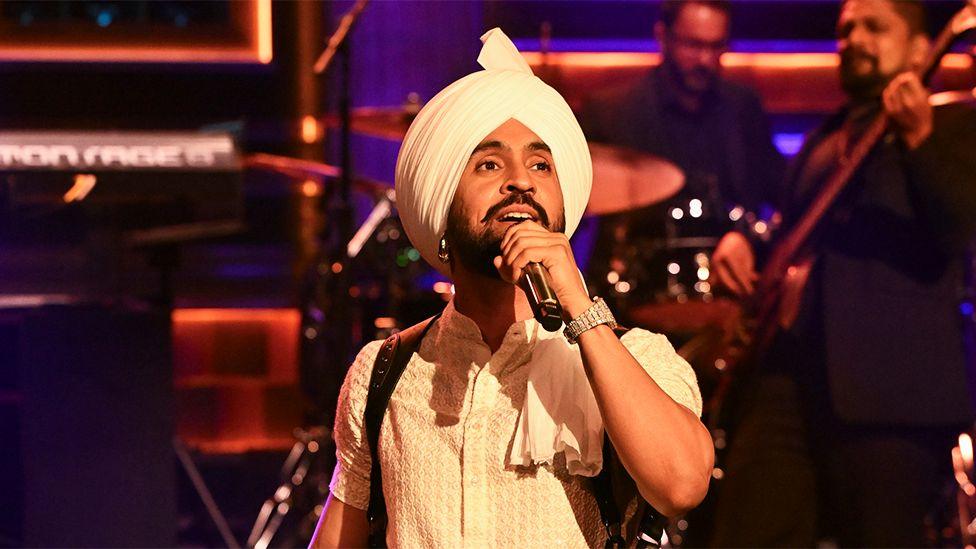
Diljit Dosanjh didn’t dilute his sound for American ears. Backed by live dhol, tumbi, and a stage design echoing Punjabi village aesthetics, he performed a medley that included “Born To Shine” and a soulful snippet of “Gigolo.” The fusion wasn’t forced—it was authentic, a seamless blend of bhangra rhythm and modern pop sensibility. What stood out wasn’t just the energy, but the intentionality: the use of Punjabi lyrics without translation, the traditional attire, the unapologetic celebration of his roots.
This wasn’t crossover music trying to fit in. It was Indian music, on its own terms, commanding space.
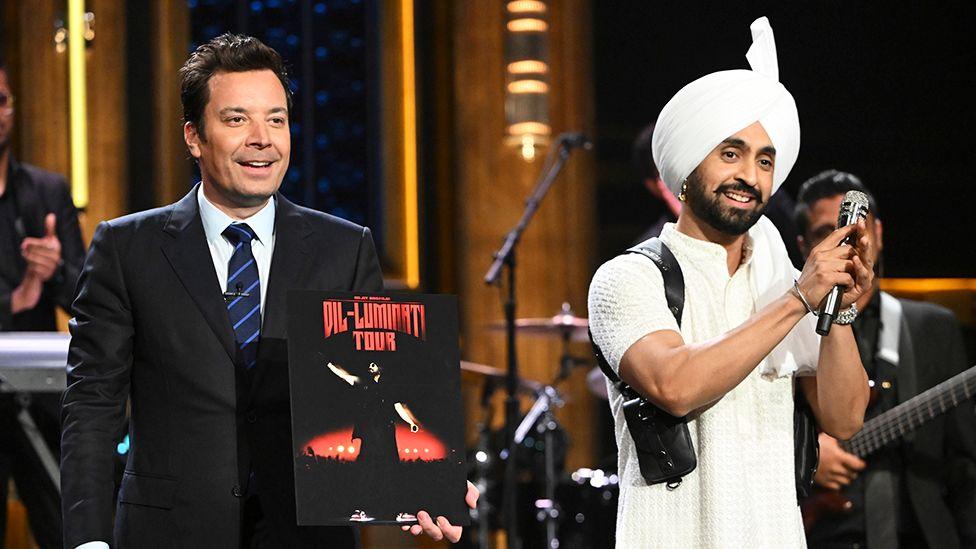
Audiences noticed. Social media lit up with clips of the performance, many highlighting how Jimmy Fallon leaned in during the tumbi solo, visibly captivated. “I’ve never heard anything like this,” Fallon said, “but I can’t stop moving.” The moment underscored a shift—Western hosts aren’t just tolerating global sounds anymore; they’re celebrating them.
The Emotional Note That Followed
Hours after the broadcast, Dosanjh posted a raw, unfiltered message on Instagram. No filters, no choreography—just a candid reflection:
“Tonight, I stood where only dreams could reach. I didn’t just sing songs—I carried the hopes of farmers in Punjab, of taxi drivers in Chandigarh, of kids learning guitar in Amritsar basements. This isn’t fame. This is responsibility.”
The note went viral, not because it was polished, but because it was real. Unlike typical post-performance gratitude, it centered collective struggle over individual success. He thanked his mother for waking up at 4 a.m. to make rotis while he practiced vocals, acknowledged the skepticism he faced early in his career (“They said Punjabi won’t fly outside India”), and dedicated the moment to “every brown kid told they don’t belong.”
That’s what turned a TV appearance into a cultural milestone. It wasn’t just about music—it was about representation, perseverance, and the quiet power of staying true.
Why This Moment Matters Beyond Music
Diljit Dosanjh’s Tonight Show debut is more than a celebrity highlight reel. It’s a case study in how cultural authenticity can break through global media gatekeeping.
For years, South Asian artists have faced a binary: assimilate or remain niche. Sing in English? Wear Western clothes? Distance from religious identity? Dosanjh did the opposite. He wore his turban proudly, performed in Punjabi, and referenced Sikh values in interviews. His success challenges the old Hollywood logic that global appeal requires cultural flattening.
Consider the ripple effects:
- Streaming spikes: Within 24 hours, his Spotify monthly listeners jumped by 1.2 million, with significant growth in the U.S., U.K., and Canada.
- Media framing: Outlets like NPR and Rolling Stone didn’t just cover the performance—they analyzed its cultural weight, calling it “a turning point for diaspora visibility.”
- Youth impact: Indian-American teens flooded TikTok with videos of themselves dancing to his music at school events, captioning them: “Finally see myself on American TV.”
This is soft power in motion—culture as connection, not commodity.
The Road That Led Here
Diljit Dosanjh’s path to global recognition was neither fast nor linear. Before he sold out arenas in Toronto and Dubai, he was a radio jockey in Punjab, earning $50 a month. His early music was dismissed as “village pop.” Critics said he’d never transcend regional borders.
But Dosanjh played the long game. He built an empire across music, film, and fashion—without ever leaving Punjab as his creative base. His 2018 album Sonu became the first Punjabi album to chart on Billboard’s World Albums list. His 2023 world tour included stops in Australia, the Middle East, and the U.S., often selling out within minutes.
Still, The Tonight Show was different. It wasn’t just another gig—it was validation from the epicenter of American pop culture. And Dosanjh knew it.
The Power of Emotional Storytelling in a Digital Age
In an era where content is king and attention spans are short, Dosanjh’s post-performance note stands out for its emotional clarity. It wasn’t crafted by a PR team. It read like a diary entry—raw, reflective, deeply personal.
That authenticity amplified the moment. Algorithms rewarded it. Fans shared it not because it was flashy, but because it was felt. In a digital landscape full of curated perfection, vulnerability became the ultimate differentiator.
For artists and creators watching, the lesson is clear: Technical brilliance gets you on stage. Emotional truth keeps you in people’s hearts.
Dosanjh didn’t just perform—he connected. And in doing so, he modeled a new kind of global stardom: one rooted in origin, not erasure.
Breaking Barriers, Not Just Charts
Diljit’s Tonight Show moment also exposed lingering gaps in mainstream media. While his performance was celebrated, some outlets still introduced him as “India’s answer to…” or “the Punjabi Drake.” These comparisons, while well-intentioned, reveal a deeper issue: the need to contextualize non-Western artists through Western reference points.
True inclusion means recognizing artists on their own terms. It’s not about who Dosanjh resembles—it’s about what he represents.
And what he represents is a generation of artists who refuse to be translated, both literally and culturally. They sing in their mother tongues. They wear their identities proudly. They build global followings without sacrificing authenticity.
Dosanjh didn’t just open doors—he kicked them down.
What This Means for Global Music
The implications of Dosanjh’s breakthrough extend far beyond one performance. They signal a broader shift in how global audiences consume music.
Consider these trends:
- Language no longer limits reach: Bad Bunny proved Spanish-language music could dominate U.S. charts. Dosanjh is doing the same for Punjabi.
- Diaspora as launchpad: The Indian diaspora in North America and the U.K. has grown into a powerful cultural force, creating demand for homegrown sounds.
- Streaming democratizes access: Platforms like YouTube and Spotify allow artists to bypass traditional gatekeepers and build international followings organically.
Dosanjh’s journey reflects this new reality. He didn’t need a record label deal in L.A. to go global. He built his audience one viral song, one digital release, one heartfelt connection at a time.
A New Blueprint for International Success
For emerging artists, Dosanjh’s path offers a replicable blueprint—not in tactics, but in philosophy.
- Stay rooted, think global: Build your art from your cultural core, but design it for universal emotional resonance.
- Leverage digital platforms aggressively: Dosanjh’s team mastered YouTube thumbnails, SEO tags, and release timing to maximize visibility.
- Engage the diaspora: Host hometown concerts, collaborate with local influencers, speak directly to shared experiences.
- Be authentic, even when it’s risky: When he wore a turban to red carpets, some called it “too religious.” He wore it anyway.
- Tell your story relentlessly: Every interview, every post, every lyric should reinforce who you are and where you come from.
It’s not about chasing Western validation. It’s about building such undeniable cultural momentum that the world has to take notice.
The Moment That Changed Everything
Diljit Dosanjh’s Tonight Show debut wasn’t just a performance. It was a declaration. A declaration that Punjabi music belongs on the world stage. That brown artists don’t need to blend in to succeed. That emotional honesty can cut through noise like nothing else.
His post-show note wasn’t an afterthought—it was the heart of the moment. In a world obsessed with metrics, he reminded us that some victories can’t be measured in streams or likes. They’re measured in tears shed by parents watching their son on American TV, in kids feeling seen for the first time, in cultures finally stepping into the light.
This is what global impact looks like—not just fame, but meaning.
For artists dreaming of their own breakthrough, the message is clear: Stay true. Work hard. And when your moment comes, speak from the heart. The world might just be ready to listen.
FAQ
What did Diljit Dosanjh perform on The Tonight Show? He performed a medley including “Born To Shine” and a segment of “Gigolo,” blending live bhangra instrumentation with modern pop elements.
Why was his emotional note so impactful? It centered collective struggle over personal fame, honoring his roots, family, and the Punjabi community—making it deeply relatable and authentic.
Has any other Punjabi artist performed on The Tonight Show? Diljit Dosanjh is the first solo Punjabi pop artist to perform as a featured musical guest on the show.
How did audiences react to his performance? The response was overwhelmingly positive, with viral social media clips, media praise, and a significant spike in global streaming numbers.
What makes his global success unique? He achieved international fame without diluting his language, identity, or cultural aesthetics—proving authenticity can drive global appeal.
Did Jimmy Fallon say anything notable about the performance? Yes, Fallon called the music “addictive” and praised the energy, saying, “I don’t understand the words, but I feel every emotion.”
Is this part of a larger trend in global music? Absolutely. Artists like Bad Bunny, Black Eyed Peas’ Latin collaborations, and K-pop acts show that non-English music is gaining mainstream acceptance worldwide.
FAQ
What should you look for in Diljit Dosanjh’s Global Moment: A Star Rises on The Tonight Show? Focus on relevance, practical value, and how well the solution matches real user intent.
Is Diljit Dosanjh’s Global Moment: A Star Rises on The Tonight Show suitable for beginners? That depends on the workflow, but a clear step-by-step approach usually makes it easier to start.
How do you compare options around Diljit Dosanjh’s Global Moment: A Star Rises on The Tonight Show? Compare features, trust signals, limitations, pricing, and ease of implementation.
What mistakes should you avoid? Avoid generic choices, weak validation, and decisions based only on marketing claims.
What is the next best step? Shortlist the most relevant options, validate them quickly, and refine from real-world results.