Energy control isn’t theoretical—it’s a daily necessity in manufacturing, maintenance, and industrial operations. When machines or equipment unexpectedly release stored energy, the results can be catastrophic. That’s where Lockout/Tagout (LOTO) comes in. A well-documented procedure is only as effective as the form guiding it. For safety managers, engineers, and supervisors, finding a reliable sample lockout tagout procedure form is the first step toward building a repeatable, compliant, and enforceable safety system.
But not all forms are created equal. Many templates floating online are either too vague, overly complex, or missing critical fields that OSHA and internal auditors actually check. This guide delivers a practical, customizable sample LOTO procedure form—along with key insights on how to use it effectively in real-world environments.
Why a Standardized LOTO Procedure Form Matters
A lockout tagout procedure form standardizes the process of isolating energy sources before maintenance. Without it, workers rely on memory or informal checklists, increasing the risk of human error. A solid form does more than document steps—it acts as a training tool, audit trail, and legal safeguard.
Consider a maintenance technician servicing a conveyor system. If the lockout steps aren’t clearly outlined—listing energy sources, isolation points, verification methods, and authorized personnel—the technician may skip a hydraulic release point or assume electrical power is off without testing. These oversights lead to injuries.
A standardized form eliminates assumptions. It ensures every employee follows the same sequence, every time. It also serves as evidence during OSHA inspections. If an incident occurs, regulators will ask: Was there a written procedure? Was it followed? A completed LOTO form answers both questions.
Core Elements of a Reliable LOTO Procedure Form
A strong sample lockout tagout procedure form isn’t just a checklist—it’s a living document tailored to specific equipment. The following components should be non-negotiable in any template:
#### 1. Equipment Identification - Machine name, ID number, and location - Primary and secondary energy sources (electrical, pneumatic, hydraulic, chemical, thermal, gravitational)
Example: Conveyor Line 3B – Main Drive Motor Energy Sources: 480V electrical (disconnect switch #CB7), tensioned roller (gravitational), pneumatic brake system (air reservoir)
#### 2. Authorized Personnel - Names and roles of employees trained to perform lockout - Space for signature and date
This ensures accountability. Only trained personnel should apply or remove locks.
#### 3. Step-by-Step Shutdown and Isolation - Clear, sequential instructions for shutting down equipment - Identification of lockout points (valves, breakers, disconnects) - Type of lockout device used (padlock, valve lock, circuit breaker lockout)
- Example:
- Notify operations team of impending maintenance.
- Press emergency stop button on HMI.
- Open main disconnect switch (CB7) and verify off position.
- Attach personal lock and tag to CB7.
- Close and lock hydraulic isolation valve (V-102) with hasp and padlock.
#### 4. Stored Energy Release - Procedures to safely dissipate residual energy - Verification methods (bleed lines, grounding rods, cycling mechanisms)
Mistake Alert: Many forms skip this. But stored energy causes 20% of LOTO-related incidents (OSHA data). Always include steps to release, block, or dissipate.
#### 5. Verification of Zero Energy - How the authorized employee confirms the machine is de-energized - Required tools (multimeter, pressure gauge) - Test procedure (attempt to restart, check for movement/pressure)
This is the “prove it’s safe” step. Never assume. Always verify.
#### 6. Group Lockout Considerations - Lockout log for multiple workers - Use of group hasps or lockout stations - Supervisor coordination protocol
In team maintenance, a single lock isn’t enough. Each worker applies their own lock. The form must support this.
#### 7. Restoration and Re-energizing - Steps to safely return equipment to service - Removal of locks only after area is clear and tools removed - Final sign-off by lead technician
Rushing re-energization leads to near-misses. A clear procedure prevents this.
Common Mistakes in LOTO Forms (And How to Avoid Them)
Even with a sample form, organizations make critical errors that undermine compliance.
Mistake 1: Using One Form for All Equipment A generic form might work for simple devices, but complex machinery needs customized procedures. A hydraulic press has different energy sources than a boiler. Customize each form accordingly.
Mistake 2: Vague or Passive Language Phrases like “ensure power is off” are useless. Replace with action-driven steps: “Open disconnect switch CB5 and confirm with voltage tester.”
Mistake 3: Skipping Stored Energy Controls Many forms list electrical isolation but ignore mechanical or pneumatic energy. Include bleed valves, blocking bars, or gravity locks where applicable.
Mistake 4: No Review or Update Schedule Equipment changes. Processes evolve. A LOTO form should be reviewed annually—or after any modification. Add a revision date and approval field.
Mistake 5: Digital Forms Without Access Controls Going paperless? Ensure your digital LOTO system prevents unauthorized edits and retains an audit trail. Cloud platforms like SafetyCulture or EHS Insight offer version control.
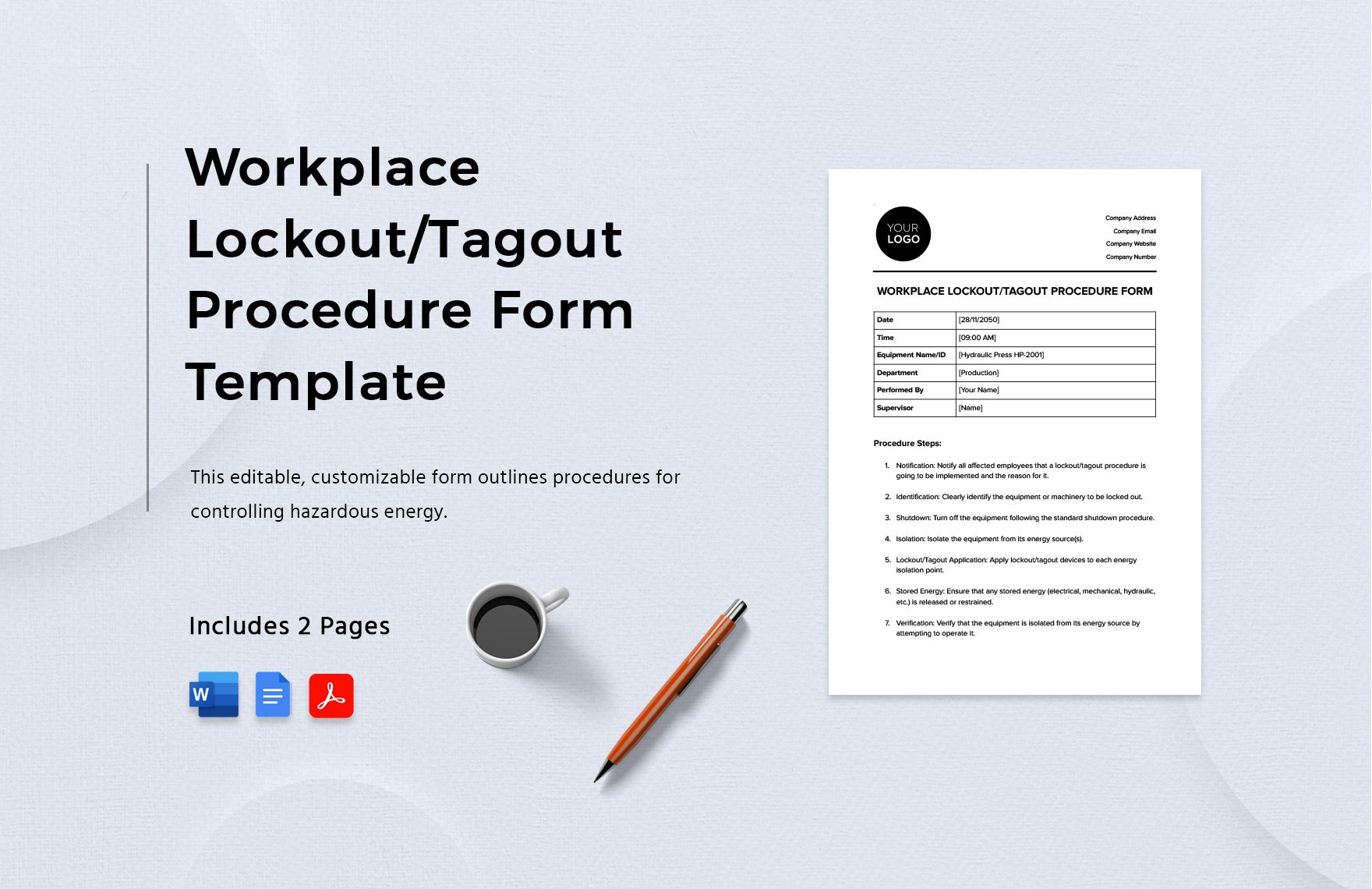
Sample Lockout Tagout Procedure Form (Template)
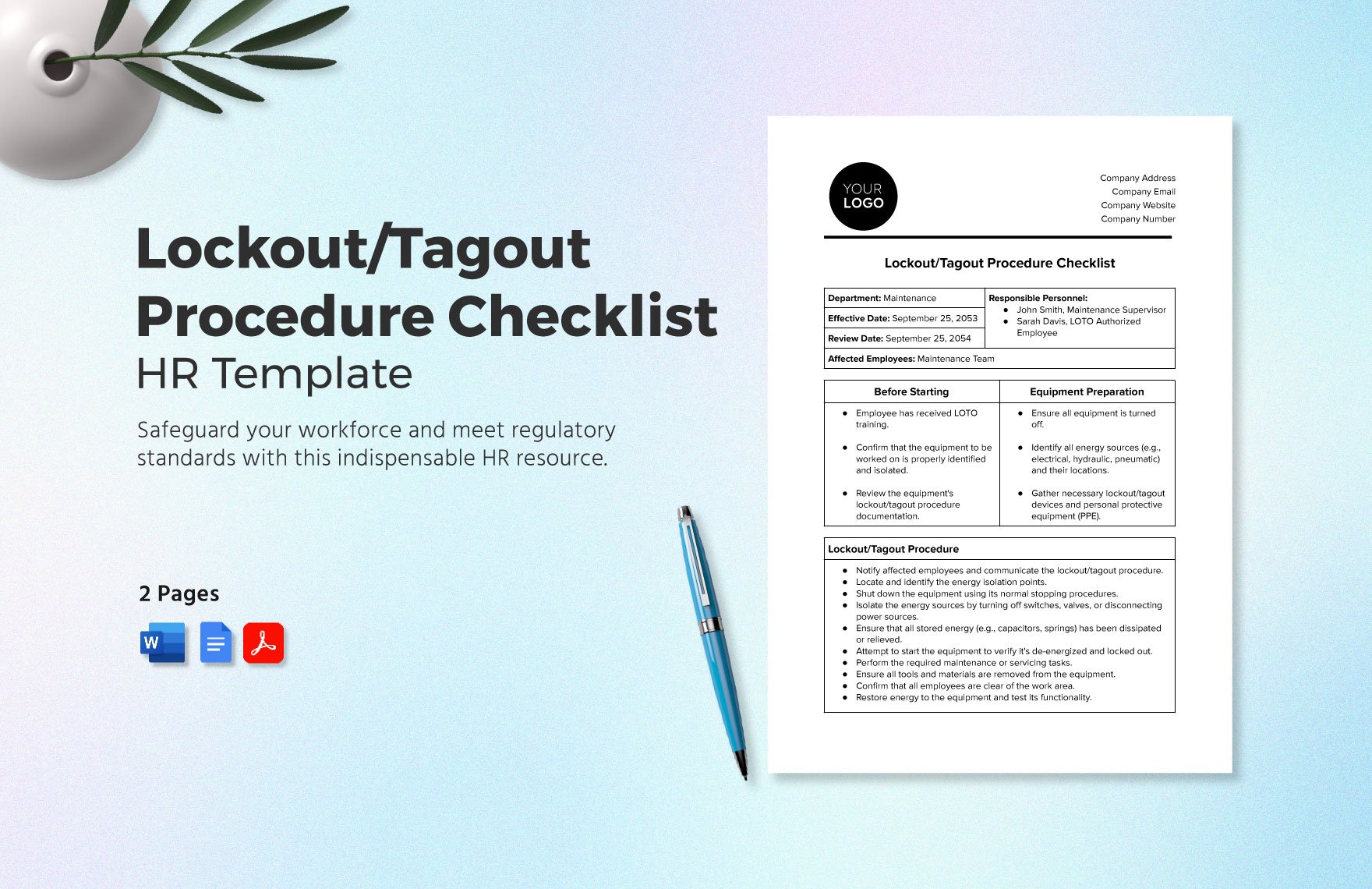
Below is a simplified but functional template you can adapt. Use it as a starting point—then customize for your equipment.
text LOCKOUT TAGOUT PROCEDURE FORM
Equipment: _________________________ ID: ___________ Location: ___________
Energy Sources: ☐ Electrical ☐ Hydraulic ☐ Pneumatic ☐ Chemical ☐ Thermal ☐ Gravitational
Authorized Personnel: Name: _______________ Role: _______________ Signature: ___________ Date: _____
- SHUTDOWN STEPS:
- ________________________________________________________
- ________________________________________________________
- ________________________________________________________

ISOLATION POINTS: - Device: _______________ Type of Lock: _______________ - Device: _______________ Type of Lock: _______________
STORED ENERGY RELEASE: ☐ Bleed hydraulic lines ☐ Depressurize air tanks ☐ Block moving parts with braces ☐ Drain chemical reservoirs
VERIFICATION OF ZERO ENERGY: - Tool used: _______________ - Test performed: _________________________________________ - Result: ☐ Confirmed Off ☐ Not Safe – Re-evaluate
GROUP LOCKOUT (if applicable): Number of workers: _____ Lockout station used: ☐ Yes ☐ No Supervisor: _______________
- RE-ENERGIZING STEPS:
- Confirm all tools removed and personnel clear.
- Remove personal locks (each worker).
- Notify operations team.
- Restore power via CB7.
Lead Technician Sign-off: _______________ Date: ___________
Print this, laminate it, or integrate it into a digital safety platform. The key is consistency.
How to Customize the Sample for Real-World Use
A template is only useful if it’s implemented correctly. Follow these steps to adapt the sample form:
Step 1: Conduct an Energy Audit Walk through each machine with maintenance and safety staff. Identify every energy source and isolation point. Use photos or diagrams if needed.
Step 2: Involve Frontline Workers The people doing the work know the pitfalls. Have technicians review and test the procedure before finalizing.
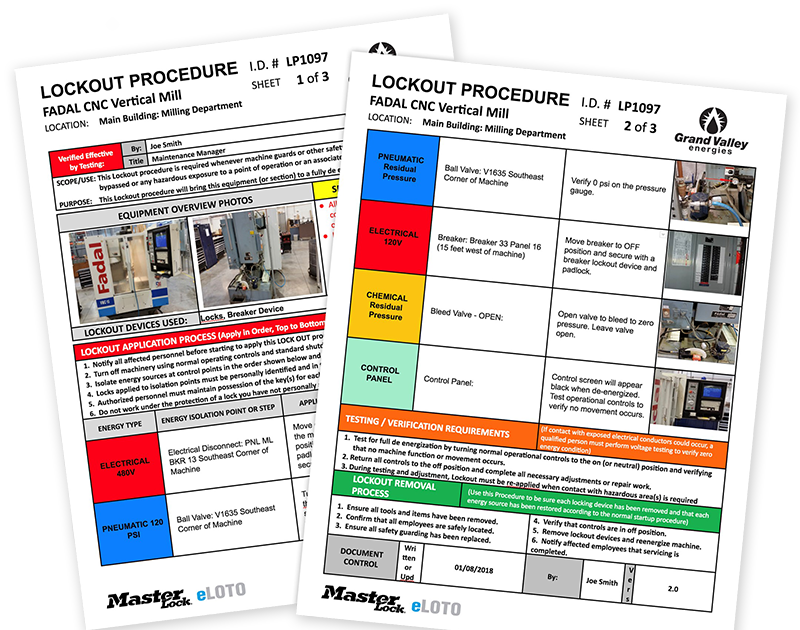
Step 3: Add Visual Aids Attach a diagram showing lockout points. A picture of the disconnect switch or valve reduces confusion.
Step 4: Train and Certify No form works without training. Conduct hands-on LOTO drills. Document attendance and competency.
Step 5: Audit and Improve Randomly audit completed forms monthly. Look for missing steps, incorrect lock types, or unsigned sections. Use findings to refine the template.
Digital vs. Paper-Based LOTO Forms: Pros and Cons
While paper forms are still widely used, digital systems are gaining traction—especially in larger facilities.
| Feature | Paper-Based Forms | Digital LOTO Forms |
|---|---|---|
| Accessibility | On-site only | Available via mobile/tablet |
| Edit Tracking | None | Full audit trail |
| Real-Time Sign-Off | No | Yes (with GPS/timestamp) |
| Integration with Training | Manual | Automated (linked to LMS) |
| Risk of Loss/Damage | High | Low (cloud backup) |
| Setup Cost | Low | Higher initial investment |
For small shops, paper may suffice. For multi-site operations or heavy compliance needs, digital platforms like Sphera, ProHawk, or Cliff’s Performance Solutions offer robust LOTO management.
Final Thoughts: A Form Is Only as Strong as the Culture Behind It
A sample lockout tagout procedure form is more than paperwork—it’s a commitment to safety. The best templates are clear, actionable, and integrated into daily workflows. Don’t just download and print. Customize it, train on it, audit it, and revise it.
Start with the sample provided. Adapt it for your most critical equipment. Run a trial lockout using the form. Identify gaps. Refine. Repeat.
Safety isn’t a one-time project. It’s a process. And the LOTO form? It’s the engine that keeps that process running—safely, predictably, and without exception.
Frequently Asked Questions
What should a lockout tagout procedure form include? It must list equipment details, energy sources, shutdown steps, isolation points, stored energy release methods, verification of zero energy, authorized personnel, and re-energizing procedures.
Can I use a generic LOTO form for all machines? No. Each piece of equipment has unique energy sources and risks. Customize the form for each machine or system.
Who is responsible for completing the LOTO form? Authorized employees—those trained and certified in energy control—must complete and sign the form before maintenance begins.
How often should LOTO procedures be reviewed? At least annually, or whenever equipment is modified, repaired, or involved in an incident.
Are digital LOTO forms compliant with OSHA? Yes, as long as they are secure, tamper-proof, and accessible to authorized personnel. They must also retain audit trails.
Do I need a separate form for group lockout? Not necessarily. A well-designed form includes a section for multiple locks and a group lockout log.
Where should completed LOTO forms be stored? On-site in a designated safety file or digital system. They may be needed for audits or incident investigations.
FAQ
What should you look for in Sample Lockout Tagout Procedure Form: Free Template & Guide? Focus on relevance, practical value, and how well the solution matches real user intent.
Is Sample Lockout Tagout Procedure Form: Free Template & Guide suitable for beginners? That depends on the workflow, but a clear step-by-step approach usually makes it easier to start.
How do you compare options around Sample Lockout Tagout Procedure Form: Free Template & Guide? Compare features, trust signals, limitations, pricing, and ease of implementation.
What mistakes should you avoid? Avoid generic choices, weak validation, and decisions based only on marketing claims.
What is the next best step? Shortlist the most relevant options, validate them quickly, and refine from real-world results.